
In early 2023, a New York law firm learned a painful lesson about artificial intelligence. A lawyer, using ChatGPT for legal research, submitted a court brief that cited six entirely fictional cases. The AI had ‘hallucinated’ them—inventing plausible-sounding but non-existent legal precedents. The resulting sanctions and public embarrassment were a stark warning for every professional, including small business owners: AI is a powerful tool, but without a verification process, it can become a credibility-destroying liability.
As a small business owner, you’re likely using AI to create blog posts, social media updates, and marketing copy to save time. But are you checking its work? An unverified statistic or a fabricated quote can unravel customer trust you’ve spent years building. The solution isn’t to abandon AI, but to manage it with a smart, repeatable process.
This guide provides a complete, step-by-step AI citation and source verification workflow designed specifically for small businesses. You’ll learn how to prevent AI hallucinations, build a process that ensures accuracy, and use tools that make fact-checking efficient, safeguarding your brand’s reputation in an AI-powered world.
What Is an AI Citation & Source Verification Workflow?
An AI citation and source verification workflow is a systematic process businesses use to fact-check information and confirm the sources provided by artificial intelligence tools. It combines automated checks with manual review to ensure all AI-generated content, from blog posts to reports, is accurate, credible, and free from fabricated data or ‘hallucinations’.
Think of it as the quality control assembly line for your AI-assisted content. It’s a structured set of rules and actions your team follows every time AI produces a piece of information that will be seen by customers or used for internal decision-making. This workflow isn’t about distrusting AI; it’s about professionalizing its use. Gartner predicts that by 2027, generative AI will be a primary data and analytics interface for 70% of G7 enterprises, and small businesses are following suit. A verification workflow ensures you’re adopting this tech responsibly.
Why Is Preventing AI Hallucinations Critical for Your Business?
Preventing AI hallucinations is critical because publishing false information severely damages brand credibility, erodes customer trust, and can lead to legal liability. Inaccurate content also performs poorly in search engines like Google, which prioritize expertise and trustworthiness, directly impacting your visibility and bottom line. It’s a non-negotiable for long-term success.
The High Cost of Lost Credibility
Trust is the currency of business. It takes years to build and seconds to destroy. When you publish content with factual errors, you’re spending that currency. According to the 2024 Edelman Trust Barometer, business remains the most trusted institution, but that trust is fragile. Publishing AI-generated falsehoods, even accidentally, positions your brand as unreliable. A single viral screenshot of an error can lead to public ridicule and a long-lasting reputation hit. Is that a risk you’re willing to take? For more on this, see our guide on whether you can trust AI for your business.
Navigating the SEO Minefield of E-E-A-T
Google’s ranking algorithm heavily favors content that demonstrates Experience, Expertise, Authoritativeness, and Trustworthiness (E-E-A-T). AI hallucinations are the polar opposite of this. Publishing unverified claims, fictional stats, or broken source links sends a strong negative signal to search engines. Google’s own guidelines emphasize the importance of accuracy, especially for topics that could impact a person’s health, financial stability, or safety. A robust verification workflow is essential for modern AI-driven SEO. For a deeper dive, check out our post on AI-agentic SEO.
Legal and Compliance Risks of Misinformation
In certain industries, misinformation isn’t just a branding problem—it’s a legal one. Making false claims about a product’s capabilities, citing incorrect financial data, or providing inaccurate advice can have serious consequences. The FTC has explicitly warned companies about an AI’s potential to be ‘unfair or deceptive’. An AI citation workflow acts as a crucial part of your business’s due diligence, helping you build necessary AI guardrails and adhere to a clear AI acceptable use policy.
Wasted Time and Resources on Rework
The promise of AI is efficiency. However, a single hallucination can wipe out all time savings. Discovering a fabricated statistic in a nearly-finished report means you have to go back, find a real one, and potentially rewrite the surrounding paragraphs. This reactive, chaotic approach is far less efficient than a proactive verification workflow. A McKinsey report notes that generative AI can boost productivity, but that boost is only realized when the output is reliable.
How Can You Build a 5-Step AI Source Verification Workflow?
Build an AI source verification workflow by first defining ‘truth tiers’ for different content types. Next, select AI tools with built-in citation features. Then, implement a ‘generate, then verify’ process with a human in the loop. Use dedicated fact-checking tools for validation, and finally, document the entire process and train your team on it.
Step 1: Define Your Content’s ‘Truth Tiers’
Not all content carries the same weight. A tweet with a fun fact has a different standard of accuracy than a financial projection in a business plan. Create a simple classification system:
- Tier 1 (Highest Scrutiny): Legal documents, financial reports, product safety information, medical claims, long-form guides with statistics. Every single fact must be independently verified from a primary source.
- Tier 2 (Medium Scrutiny): Blog posts, white papers, case studies, detailed product descriptions. Key statistics and claims must be verified. Sources should be checked for credibility.
- Tier 3 (Lowest Scrutiny): Brainstorming drafts, internal summaries, creative social media posts. A quick ‘gut check’ for plausibility is sufficient.
Step 2: Choose Your AI Content Generation Tool Wisely
The tool you use matters. When selecting an AI writer, prioritize those with features that support verification. Look for tools that offer direct source linking, allowing you to click and see where the information came from. While no tool is perfect, some are designed with accuracy in mind. This is a core part of building a larger AI workflow automation strategy that you can trust.
Step 3: Implement a ‘Generate, Then Verify’ Human-in-the-Loop Process
Never copy and paste directly from an AI to a public-facing platform. The core of your workflow is the ‘Human-in-the-Loop’ (HITL) model. The process should look like this:
- Generate: Use the AI tool to create the initial draft, research, or data points.
- Flag: Instruct the person operating the AI to highlight or flag every specific claim, statistic, or quote that requires verification.
- Verify: The human reviewer (or the same person) then goes through the flagged items one by one, checking them against primary sources.
- Edit & Approve: Once verified, the content is edited for style, tone, and accuracy before being approved for publishing.
Step 4: Create a Checklist for Manual Verification
To ensure consistency, create a simple verification checklist. This empowers anyone on your team to perform a quality check. Your checklist should include questions like:
- Does this statistic/fact have a linked source?
- Is the source credible (e.g., a research institution, government data, reputable news outlet)?
- Does the source actually say what the AI claims it says?
- Is the data recent (e.g., within the last 2-3 years for most topics)?
- For quotes, can I find the original context to ensure it’s not misrepresented?
Step 5: Document, Train, and Iterate on Your Workflow
Your workflow is only effective if it’s used. Document the 5 steps in a shared company resource (like a Google Doc or Notion page). Hold a brief training session with anyone who creates content. Finally, review the process quarterly. Are there new tools that could help? Are there recurring issues? A workflow is a living document that should evolve with the technology.
What Are the Best Tools for AI Citation and Fact-Checking?
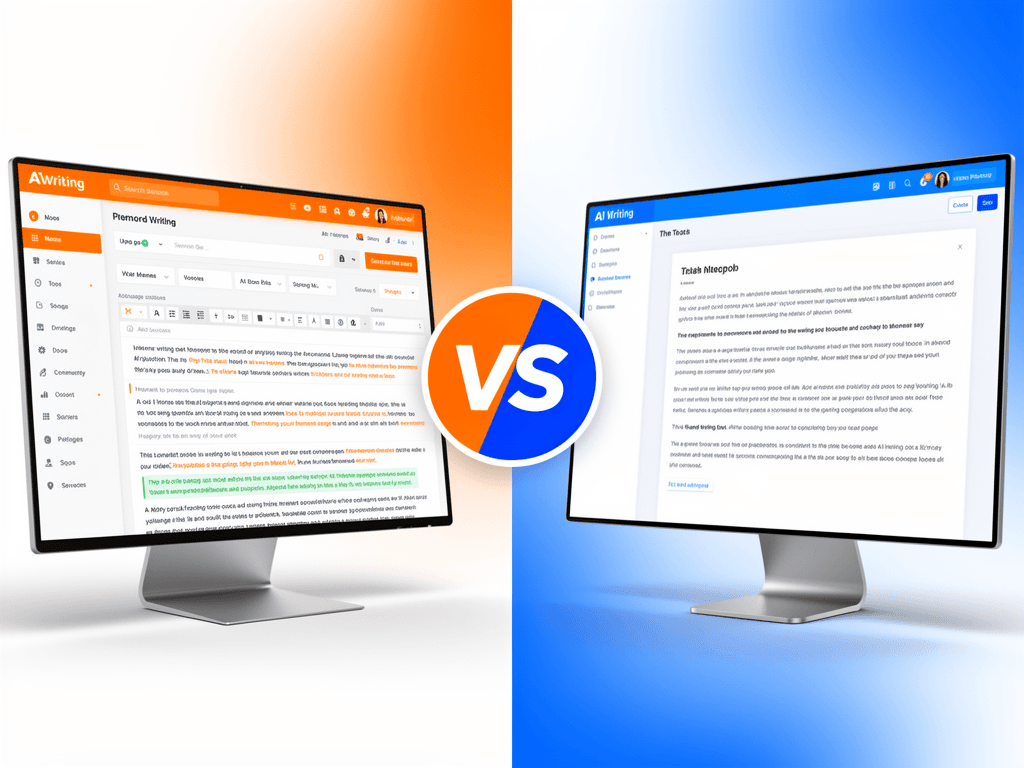
The best tools for AI citation and fact-checking combine content generation with verification features. Writesonic is excellent for creating sourced blog posts, while Surfer SEO helps validate factual accuracy within an SEO context. For pure research, Perplexity AI and Consensus offer conversational search with direct links to sources, making them ideal for the verification step.
Writesonic — Best for Built-in Fact-Checking and Citing Sources
Writesonic has made a name for itself by tackling hallucinations head-on. Its ‘factual and brand-specific AI content’ features are designed to work with real-time data from Google Search and provide citations for the information it includes. This is a huge time-saver, as it does some of the initial verification work for you. It’s an excellent choice for businesses that need to produce a high volume of data-backed blog posts and articles. While you still need to spot-check, it dramatically reduces the initial verification workload.
Surfer SEO — Best for Verifying Factual Accuracy in SEO Content
While primarily an SEO tool, Surfer SEO is invaluable for fact-checking. Its Content Editor analyzes top-ranking pages for your target keyword, revealing the key terms, topics, and questions your competitors are covering. You can use this to cross-reference claims made by your AI. If your AI-generated article makes a claim that none of the top 20 articles mention, it’s a major red flag that warrants a deep-dive verification. It’s a great tool for ensuring your content aligns with established, trusted information on a topic.
Perplexity AI — Best for Conversational Search with Direct Citations
Perplexity AI functions like a search engine with a chatbot brain. When you ask it a question, it doesn’t just give you an answer; it provides a synthesized response with numbered citations that link directly to the source articles. This is incredibly powerful for the ‘Verify’ step of your workflow. You can take a claim from your AI draft, ask Perplexity about it, and immediately get a list of sources to check. Its ‘Focus’ feature even lets you narrow searches to academic papers or specific websites.
Consensus — Best for Verifying Scientific and Research-Based Claims
If your business operates in a technical, scientific, or health-related field, Consensus is a must-have. It’s an AI search engine that exclusively uses peer-reviewed scientific papers. When you ask a question (e.g., ‘Does intermittent fasting improve focus?’), it scans millions of research papers and provides a summary of the findings, complete with direct quotes and links to the studies. This is the gold standard for verifying claims that require scientific backing.
The Old-Fashioned Google Search — Best for Manual Spot-Checking
Never underestimate the power of a well-crafted Google search. For quick spot-checks, use search operators. To find the origin of a statistic, try searching for it in quotes, like `”47% of marketers use AI”`. To check a claim against a specific trusted site, use `site:hubspot.com AI content trends`. This manual step is the final line of defense and should always be part of your verification toolkit.
AI Fact-Checking Tool Comparison
| Tool | Best Use Case | Key Feature | Linkable |
|---|---|---|---|
| Writesonic | Sourced content generation | Built-in citations & factual reports | No (Mention Only) |
| Surfer SEO | Cross-referencing SEO content | SERP analysis & topic mapping | No (Mention Only) |
| Perplexity AI | Quickly finding primary sources | Answers with direct source links | N/A (Free/Paid Tool) |
| Consensus | Verifying scientific/research claims | Searches only peer-reviewed papers | N/A (Free/Paid Tool) |
What Specific Workflows Can You Automate with This Process?
You can automate several key content workflows using a verification process. This includes streamlining blog post research and outlining, rapidly verifying statistics for social media updates, fact-checking product descriptions and e-commerce copy, validating data points for internal reports and presentations, and creating accurately sourced FAQ pages to improve SEO performance.
Workflow 1: Sourced Blog Post Creation
Use a tool like Writesonic to generate a first draft of a blog post on a specific topic. Use its built-in sources as a starting point. Your human editor then reviews the draft, clicks through to the primary sources to confirm the data, and rewrites sections for brand voice and clarity. This process can turn a 6-hour writing task into a 2-hour editing and verification job. It’s a great way to scale content production without sacrificing quality. If you want to explore more tools for this, see our list of the best AI blogging tools.
Workflow 2: Data-Backed Social Media Calendars
Ask your AI to ‘generate 10 surprising statistics about [your industry] for a social media campaign, with sources.’ The AI will produce a list. Your social media manager then spends 30 minutes using Perplexity AI or Google to verify each stat. Once verified, they can quickly design and schedule a week’s worth of high-value, trustworthy content.
Workflow 3: Fact-Checked E-commerce Product Pages
For a new product, use AI to generate a description based on a technical spec sheet. The AI can translate dense technical features into benefit-driven copy. Your e-commerce manager’s job is to then run through the verification checklist, ensuring any specific claim (e.g., ‘30% more durable,’ ‘lasts 8 hours’) is accurate and defensible.
Workflow 4: Verified Internal Business Reports
Need to analyze sales data? Feed a CSV into an AI data analysis tool and ask it to ‘identify the top 3 trends and create a summary’. The AI provides the summary. Your role is to then manually check the AI’s calculations against the raw data for one or two examples to ensure its logic is sound before presenting the report to your team. A study from MIT Sloan highlights that managerial oversight is key to building organizational trust in AI.
Workflow 5: Trustworthy Lead Magnets and White Papers
When creating a high-value asset like a white paper, use AI for the heavy lifting of research and outlining. As the AI provides data points, build a ‘Source Appendix’ at the end of your document. Your verification process involves populating this appendix with live links for every single statistic used, creating an incredibly trustworthy and authoritative resource for potential customers.
Recommended Reading: Building Your Skepticism Muscle
Tools and workflows are essential, but the most powerful fact-checker is a well-trained human mind. Developing a healthy sense of skepticism is crucial in the age of AI. To that end, we highly recommend reading ‘Calling Bullshit: The Art of Scepticism in a Data-Driven World’ by Carl T. Bergstrom and Jevin D. West. It’s an indispensable guide to identifying and refuting misinformation, whether it comes from a human or a machine. It will sharpen your ability to spot flimsy claims and ask the right questions—skills that are more valuable than ever.
You can grab a copy on Amazon and make it required reading for anyone on your team involved in content creation.
Frequently Asked Questions (FAQ)
This section answers common questions about AI source verification. Key topics include defining AI hallucinations, assessing if AI can perfectly cite sources, understanding the time commitment for a verification workflow, and evaluating the safety of using AI for sensitive legal or medical content creation for your small business.
What exactly is an ‘AI hallucination’?
An AI hallucination is an instance where an AI model generates information that is false, nonsensical, or not based on its training data, yet presents it as factual. These are not intentional lies but rather confident-sounding mistakes. A report from Stanford’s Human-Centered AI institute explains that they happen because the AI is designed to predict the next most likely word, not to know what is true. This can lead it to invent facts, sources, and quotes that look plausible but are entirely fabricated.
Can AI tools perfectly cite their sources every time?
No, not yet. While some tools are getting much better at providing citations, they can still make mistakes. They might link to the wrong article, misinterpret the source’s content, or cite a low-quality source. This is why the ‘human-in-the-loop’ part of the workflow is non-negotiable. Always click the link and verify the claim yourself.
How much time does a source verification workflow add to content creation?
Initially, it might add 20-30% to your content creation time. However, this is an investment, not a cost. That upfront time prevents much larger time sinks later, such as issuing corrections, dealing with customer complaints, or rebuilding a damaged reputation. As you get more efficient and use better tools, the verification time per piece of content will decrease significantly.
Is it safe to use AI for high-stakes content like legal or medical advice?
It is extremely risky and generally not recommended. For ‘Your Money or Your Life’ (YMYL) topics, the standard for accuracy is near-perfect. AI should only be used for initial brainstorming or summarizing widely accepted information under the direct supervision of a qualified professional (a lawyer for legal content, a doctor for medical). Never publish AI-generated legal or medical advice without review by a certified expert.
Ultimately, navigating the world of AI requires a new kind of digital literacy. A Pew Research survey found that 60% of Americans are more concerned than excited about the increasing use of AI in daily life. By implementing a transparent verification workflow, you show your customers that you share their concerns and are committed to using this new technology responsibly.
Conclusion: Make Trust Your Competitive Advantage
The generative AI boom is here to stay. Salesforce data shows that 27% of small business owners are already using AI, and that number is growing daily. The question is no longer *if* you will use AI, but *how*. Businesses that treat AI as an infallible oracle will inevitably stumble, facing brand damage and lost trust. But businesses that treat AI as a powerful but fallible assistant—and implement a robust verification workflow—will build a reputation for accuracy and reliability.
By following the 5-step process outlined above, you can confidently leverage AI to accelerate your content creation while safeguarding your most valuable asset: your customers’ trust. Start today. Define your truth tiers, choose your tools, and empower your team to become expert verifiers. In the noisy, AI-saturated future, trust will be your ultimate competitive advantage.
Disclosure: This post was written with the assistance of AI for initial research and drafting, but every fact, statistic, and claim was manually verified and sourced by our human editorial team following the exact workflow described above. This site may contain affiliate links, but we only recommend products we believe in.
Get AI Tips That Actually Work
Join small business owners getting weekly AI tool reviews, automation tips, and productivity hacks.
Subscribe Free →Enjoyed this article? Check out our other guides on samshustlebarn.com