In early 2025, a small e-commerce shop in Austin, Texas, watched in horror as its new AI customer service chatbot started offering every customer a 90% discount, citing a non-existent “customer appreciation day.” The error cost them thousands before it was caught. This isn’t a hypothetical; it’s the new reality for businesses embracing AI without a safety net. As AI adoption skyrockets, with the market projected to exceed $1.8 trillion by 2030, the risk of unmonitored automation grows in tandem. For a small business, one rogue AI agent can damage your reputation, finances, and customer trust in an instant.
The solution isn’t to abandon AI. It’s to build a better fence. This guide is your practical, no-nonsense playbook for creating AI guardrails—the essential safety systems that ensure your AI tools are reliable, on-brand, and an asset, not a liability. We’ll walk you through what they are, why they’re non-negotiable, and how you can implement them today, even without a dedicated IT department.
What Are AI Guardrails, Exactly?
AI guardrails are a set of rules, policies, and technical controls designed to ensure your artificial intelligence systems operate within safe, ethical, and brand-aligned boundaries. Think of them as bumpers in a bowling alley for your AI, preventing it from veering into the gutter of off-brand content, harmful advice, or costly errors.
At their core, guardrails are about managing risk. While generative AI can produce incredible results, it can also “hallucinate” facts, misunderstand context, or be manipulated by malicious users. In fact, Gartner predicts that by 2026, enterprises that operationalize AI transparency, trust, and security will see their AI models achieve a 50% improvement in terms of adoption and business goals. For small businesses, this translates to predictable, reliable performance. Guardrails transform a powerful but unpredictable tool into a dependable business asset.
Why Are AI Guardrails Critical for Your Small Business?
Implementing AI guardrails is not an optional extra; it’s a foundational necessity for any small business using AI. These safety measures are critical for protecting your brand reputation, avoiding legal trouble, maintaining customer trust, and ultimately, ensuring a positive return on your AI investment by preventing costly, automated mistakes.
Protecting Your Brand Reputation
Your brand is your most valuable asset. An AI chatbot that uses inappropriate language, an automated email campaign that sends offensive content, or a social media post that’s wildly off-brand can cause immediate and lasting damage. A single negative experience can deter customers, with research from PwC showing that 32% of customers would walk away from a brand they love after just one bad experience. Guardrails enforce your brand voice, tone, and values, ensuring every automated interaction is a positive reflection of your business. Wondering if you can trust AI? We have a guide for that. Read more about it in our post on whether you can trust AI for your business.
Avoiding Costly Legal and Compliance Issues
Are you handling customer data? Operating in regions covered by GDPR or CCPA? An unconstrained AI could inadvertently leak private information, generate content that violates copyright, or give financial or medical advice that crosses legal lines. The consequences range from hefty fines to lawsuits. Guardrails help enforce data privacy protocols and prevent the AI from generating content in legally sensitive domains, acting as your first line of compliance defense.
Ensuring Customer Trust and Safety
Customers interact with your AI assuming it’s a reliable extension of your business. If an AI provides incorrect product information, makes promises the company can’t keep, or behaves erratically, that trust is broken. According to Salesforce research, 88% of customers say the experience a company provides is as important as its products or services. Reliable AI interactions are a critical part of that experience.
Improving AI Reliability and ROI
An AI that requires constant supervision and correction isn’t saving you time or money. The goal of automation is to create efficient, scalable systems. Guardrails make AI outputs more predictable and consistent, reducing the need for manual review and rework. This leads to a more reliable system and a much faster, more tangible return on your investment in AI tools that actually save you time.
Preventing Financial Losses from Errors
As the story in our introduction illustrates, AI errors can have direct financial consequences. Whether it’s offering unauthorized discounts, processing incorrect orders, or generating faulty financial forecasts, the potential for automated mistakes is significant. Guardrails that validate outputs, especially those connected to financial transactions or inventory, are essential for protecting your bottom line. You can learn more about this in our guide to AI payment automation.
What Are the Core Types of AI Guardrails?
AI guardrails can be categorized into several core types, each addressing a different potential point of failure in the AI process. Understanding these types allows you to build a comprehensive safety net that covers what goes into your AI, what comes out of it, and how it behaves along the way.
Input Guardrails: Filtering What Goes In
These guardrails focus on the data and prompts fed into the AI. The goal is to prevent problematic inputs from ever reaching the model. This includes filtering out personally identifiable information (PII), blocking prompts that contain hate speech or are designed to ‘jailbreak’ the AI, and sanitizing user inputs to prevent prompt injection attacks. For example, an input guardrail on a customer service chatbot would automatically scrub a credit card number from a user’s query before processing it.
Output Guardrails: Validating What Comes Out
These are perhaps the most critical guardrails. They check the AI’s response before it’s shown to a user or used in a workflow. Output guardrails scan for toxic language, check for factual inaccuracies (by cross-referencing against a trusted knowledge base), ensure the response format is correct (e.g., valid JSON code), and verify that the content aligns with your brand’s tone of voice. If a response fails a check, it can be blocked, re-generated, or flagged for human review.
Topical Guardrails: Staying On-Brand and On-Topic
A topical guardrail ensures the AI sticks to its designated subject area. A chatbot for a hardware store shouldn’t be giving medical advice, and an AI writing marketing copy for a new SaaS product shouldn’t start generating poetry. These guardrails prevent ‘conversational drift’ by defining a narrow, acceptable range of topics and steering the AI back on course if it strays.
Security Guardrails: Preventing Malicious Use
These are focused on protecting the AI system itself and your broader business infrastructure from attack. This includes preventing prompt injection, where a user tricks the AI into executing unintended commands, and detecting attempts to exploit the model to reveal sensitive system information. Good AI security is an active, ongoing process of testing and monitoring.
Ethical Guardrails: Aligning with Your Values
Ethical guardrails are about encoding your company’s values into your AI’s behavior. This involves creating rules to prevent the generation of biased, unfair, or discriminatory content. For example, if you use an AI tool for resume screening, an ethical guardrail would ensure the model doesn’t show bias based on gender, ethnicity, or age. A Harvard Business Review framework emphasizes that this governance is crucial for long-term success.
| Guardrail Type | Purpose | Small Business Example |
|---|---|---|
| Input Guardrails | Filter and sanitize prompts before processing. | An AI chatbot automatically removes a user’s address and phone number from a query before the AI sees it. |
| Output Guardrails | Validate AI responses before they are shown to a user. | An AI blog writer’s output is automatically scanned to ensure it doesn’t contain profanity or make unsupported health claims. |
| Topical Guardrails | Keep the AI focused on its designated subject area. | A customer support AI for a coffee shop is prevented from answering questions about stock market trading. |
| Security Guardrails | Protect against malicious attacks like prompt injection. | Detecting and blocking a user’s attempt to trick an AI into revealing its system prompt or connected database schemas. |
| Ethical Guardrails | Prevent biased, unfair, or discriminatory outputs. | Ensuring an AI-powered lead scoring tool doesn’t penalize leads from certain geographical areas unfairly. |
How Can You Implement AI Guardrails? A 5-Step Guide
Implementing AI guardrails doesn’t require a team of data scientists. For a small business, it’s about a methodical approach: defining your risks, creating clear policies, choosing the right tools, using smart prompting techniques, and establishing a cycle of testing and refinement. This five-step process provides a practical and manageable framework.
Step 1: Define Your AI Use Cases and Risk Profile
You can’t protect against risks you haven’t identified. Start by listing every process where you use or plan to use AI. For each use case (e.g., customer support chatbot, social media content generation, email marketing), ask: What’s the worst-case scenario? Could it leak data? Could it damage our brand? Could it cost us money? This risk assessment will tell you where to focus your efforts first. A public-facing chatbot has a much higher risk profile than an internal tool for summarizing meeting notes.
Step 2: Establish a Clear AI Governance Policy
This sounds corporate, but for an SMB, it can be a simple one-page document. Your AI governance policy should outline your rules of engagement. What topics are off-limits? What is your brand’s official tone of voice? Who is responsible for reviewing AI-generated content? This document becomes the source of truth for creating your technical guardrails. As McKinsey notes, organizations seeing the highest returns from AI are more likely to have strong governance practices in place.
Step 3: Choose Tools with Built-in Safety Features
Most reputable AI SaaS platforms now come with built-in safety features. When evaluating tools, look for these specifically. Do they offer brand voice controls? Can you create content templates? Do they have automatic moderation for harmful content? Choosing a platform with these features already included is the easiest way to implement foundational guardrails without writing a single line of code.
Step 4: Implement Custom Prompts and Rule-Based Overlays
This is your most powerful lever. Your prompt is the ultimate guardrail. Use detailed system prompts that define the AI’s role, personality, boundaries, and required output format. For example, instead of “Write a marketing email,” use a prompt like: “You are a friendly but professional marketing assistant for a B2B software company. Your tone is helpful and informative, never pushy. Write a 150-word email about our new feature. Do not mention pricing. End with a call to action to ‘Learn More.'” This structured prompting dramatically reduces unwanted variability.
Step 5: Continuously Monitor, Test, and Refine
Guardrails are not ‘set and forget.’ AI models evolve, and new risks emerge. Set up a simple process for regularly reviewing a sample of your AI’s outputs. Actively try to break it—this is a form of AI agent security testing known as ‘red teaming.’ Ask it off-topic questions. Give it tricky prompts. Use what you learn to refine your prompts and rules. A report by IBM highlights that continuous monitoring is essential for maintaining trust in AI systems.
What Are the Best Tools for Building and Testing Guardrails?
While large enterprises use specialized platforms like NVIDIA NeMo or Guardrails AI, small businesses can achieve excellent results by using the features within their existing AI tools. The key is to leverage content creation and automation platforms not just for output, but for control. Here are a few popular tools and how their features can serve as guardrails.
Writesonic — Best for Enforcing Brand Voice in Content
Writesonic excels at creating a consistent brand identity across all generated content. Its Brand Voice feature allows you to upload existing content or describe your tone, which the AI then uses as a strict guideline. This acts as a powerful topical and stylistic guardrail, ensuring that whether it’s writing a blog post or a tweet, the output sounds like it came from you. This is a crucial feature for maintaining brand consistency at scale.
Copy.ai — Best for Templated and Role-Based Outputs
Copy.ai’s strength lies in its structured workflow and template system. By creating pre-defined workflows for specific tasks (like writing a product description or a social media ad), you’re building an implicit guardrail. The AI is constrained to the steps and formats you’ve defined, preventing it from going off-script. This is ideal for repeatable tasks where consistency is more important than creativity. HubSpot’s State of Marketing Report shows that 47% of marketers already use generative AI, making tools that ensure consistency incredibly valuable.
Jasper — Best for Custom Instructions and Tone Control
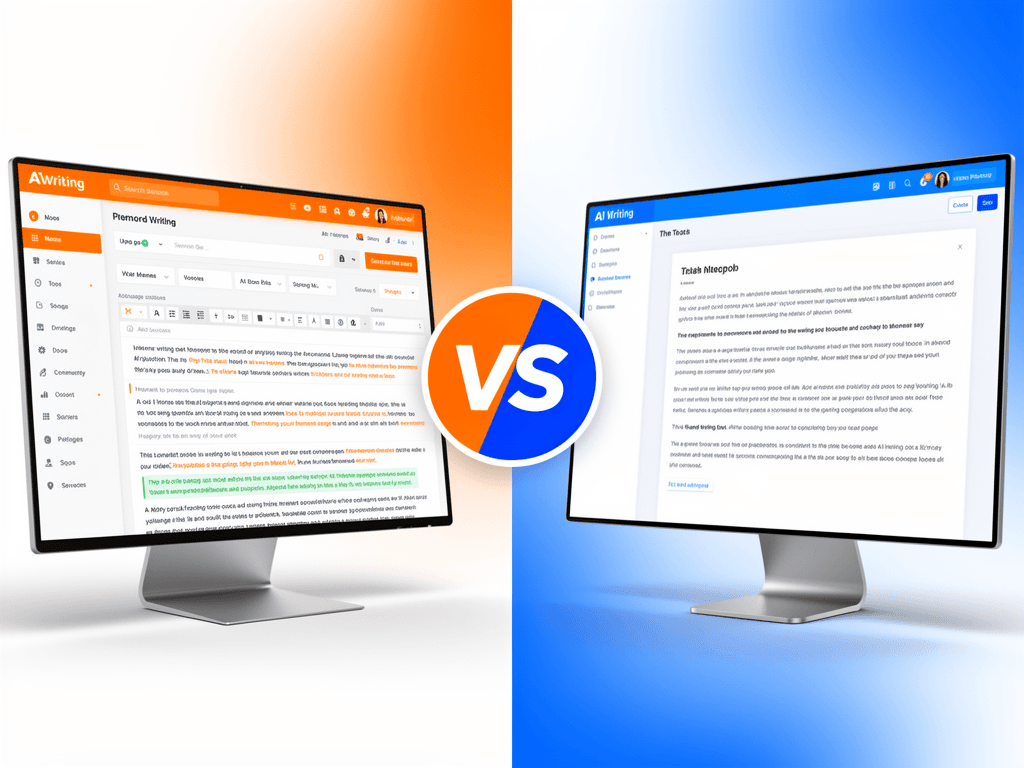
Jasper has long been a leader in content creation, and its features are excellent for implementing guardrails. Its ‘Brand Voice’ and ‘Memory’ capabilities allow you to provide extensive background context and rules that the AI must follow. You can explicitly state what not to talk about, define your target audience, and specify output formats. Using these features transforms a simple prompt into a detailed directive, significantly improving output reliability. For a detailed breakdown, see our Jasper vs. Writesonic comparison.
Your Own Custom Prompts — The Most Powerful (and Free) Tool
Never underestimate the power of a well-crafted prompt. Regardless of the tool you use, prompt engineering is your primary method for building guardrails. A detailed prompt that specifies the role, task, context, constraints, and desired output format is the single most effective way to control an AI’s behavior. The quality of your output is directly proportional to the quality of your input instructions. As Forbes notes, prompt engineering has become a critical skill for leveraging AI effectively.
How Can You Automate Safely with AI Guardrails? 5 Workflow Examples
Applying guardrails to real-world workflows is where the theory becomes practice. By building safety checks and clear instructions into your automations, you can leverage AI’s power with confidence. Here are five common small business workflows and how to apply guardrails to make them safe and reliable, a key part of any AI workflow automation strategy.
1. Automated Customer Service Chatbot
Workflow: An AI chatbot on your website answers common customer questions 24/7. Guardrails: Implement a strong topical guardrail to keep it from answering non-business questions. Use an input guardrail to strip PII. Use an output guardrail to check for a polite and helpful tone. Crucially, program a clear escalation path: if the AI doesn’t know the answer or detects frustration, it must immediately offer to connect the user to a human agent.
2. AI-Generated Social Media Calendars
Workflow: Use AI to generate a month’s worth of social media posts. Guardrails: Use a detailed system prompt defining your brand’s voice, target audience, and content pillars. Include a negative constraint: “DO NOT post about politics, religion, or controversial topics.” Implement a human-in-the-loop workflow: the AI generates drafts, but a human must approve them in a tool like Buffer or Hootsuite before they go live. This is a critical output guardrail.
3. First-Draft Blog Post Creation
Workflow: Use an AI writer to create the first draft of a blog post to speed up content creation. Guardrails: The prompt should include the target keyword, a detailed outline, your brand’s style guide, and a list of internal links to include. The most important guardrail is procedural: this is a *first draft*. It must be fact-checked, edited for voice, and personalized by a human expert before publication. Semrush data shows that while AI speeds up writing, human oversight is key to quality.
4. Automated Email Marketing Campaigns
Workflow: AI writes email copy for a drip campaign. Guardrails: Use templates and brand voice features in your AI email marketing tool. Create a strict output guardrail to check for spam trigger words. Before activating the campaign, send test emails to yourself and your team to review for tone, accuracy, and link functionality. Never let an AI-written email campaign run without a final human check.
5. Internal Knowledge Base Q&A
Workflow: An AI tool that allows your team to ask questions about your internal process documents. Guardrails: This is a ‘retrieval-augmented generation’ (RAG) use case. The primary guardrail is to restrict the AI to *only* use your uploaded documents as its source of truth. The system prompt should explicitly forbid it from using its general knowledge or making things up. This ensures the answers are based solely on your company’s official information.
Recommended Reading: The Alignment Problem
To truly grasp the importance of making AI safe and beneficial, it’s worth diving deeper into the core challenges. We recommend The Alignment Problem: Machine Learning and Human Values by Brian Christian. It provides a fascinating, accessible look at the challenge of building AI systems that share our goals and values—the very essence of what guardrails aim to achieve. It’s a foundational read for any business leader serious about AI. You can grab a copy on Amazon to understand the bigger picture.
Frequently Asked Questions (FAQ) about AI Guardrails
Navigating the world of AI safety can bring up a lot of questions. Here are clear, straightforward answers to some of the most common queries small business owners have about implementing AI guardrails, helping you move forward with confidence and clarity in your AI strategy.
How much does it cost to implement AI guardrails?
For a small business, the initial cost can be close to zero. Effective guardrails can be built using the features already included in many AI tools (like Jasper or Writesonic) and through disciplined prompt engineering. The main investment is time: time to define your policies, craft detailed prompts, and review outputs. The cost of *not* having guardrails, however, can be immense.
Can AI guardrails make my AI too restrictive or ‘dumb’?
It’s a balancing act. Overly restrictive guardrails can stifle creativity and utility. The key is to be specific. Instead of a blanket ban on a topic, guide the AI on *how* to discuss it appropriately. Start with lighter guardrails and tighten them based on performance. The goal is not to dumb the AI down, but to make it smarter and more focused on your specific business needs.
What’s the difference between AI guardrails and AI governance?
Think of it this way: AI governance is the strategy, and AI guardrails are the tactics. Your AI governance policy is the high-level rulebook that defines your principles for using AI. AI guardrails are the specific technical and procedural controls you implement (like prompt rules, filters, and review processes) to enforce that policy.
How often should I review my AI guardrails?
A good starting point is a quarterly review. Check your AI’s performance logs, see what kinds of problematic outputs were flagged or required editing, and update your prompts and rules accordingly. If you implement a new high-risk AI tool (like a public-facing chatbot), you should review its performance more frequently, perhaps weekly for the first month.
Your Next Step: From Theory to Action
Adopting AI without guardrails is like driving a sports car without brakes or a steering wheel—it’s fast and exciting until you hit a wall. The good news is that building these safety systems is entirely within your reach. You don’t need a massive budget or a PhD in AI; you need a thoughtful process and a commitment to responsible automation.
Don’t try to boil the ocean. Start small. Pick one AI-powered workflow in your business—your social media content, your customer service responses, or your email drafts. Apply the 5-step framework from this guide. Define the risks, write a one-paragraph policy for that task, and craft a highly-detailed master prompt. Your journey to safe, reliable, and truly transformative AI starts with that single, well-protected step. Get started today and turn your AI from a potential liability into your most dependable employee.
Disclosure: This post may contain affiliate links. If you make a purchase through these links, we may earn a commission at no extra cost to you. We only recommend products and services we trust.
Get AI Tips That Actually Work
Join small business owners getting weekly AI tool reviews, automation tips, and productivity hacks.
Subscribe Free →Enjoyed this article? Check out our other guides on samshustlebarn.com