
In mid-2024, Google rolled out AI Overviews, and the digital landscape shifted. The familiar list of ten blue links began to be replaced by a conversational, AI-generated summary. For many small businesses, this change was an earthquake, with some reporting traffic drops up to 60%. This isn’t the end of search, but a fundamental evolution. The old rules of SEO are changing, and a new discipline is emerging: Answer Engine Optimization (AEO).
If you’ve felt a dip in your website’s traffic or uncertainty about competing in this new era, the game has changed from ranking for keywords to becoming the source of truth for AI. This guide is your playbook. We will demystify AEO and provide a practical, step-by-step strategy to turn this threat into your greatest opportunity.
What Exactly Is AI Answer Engine Optimization (AEO)?
AI Answer Engine Optimization (AEO) is the practice of creating and structuring your website’s content to be found, understood, and featured by AI-powered search tools like Google’s AI Overviews. Unlike traditional SEO which targets keyword rankings, AEO focuses on providing direct, authoritative, and well-synthesized answers to specific user questions, making your content a prime source for AI-generated summaries.
From SEO to AEO: The Great Search Shift of the 2020s
For two decades, SEO was about identifying keywords, creating content, and building links to rank on page one. AEO is the next evolution. It acknowledges that search engines are now answer engines, not just indexing engines. The goal is no longer just being on the list of results, but being in the answer itself. This shift is driven by Large Language Models (LLMs), which can understand context and synthesize information far better than traditional algorithms.
Why AI Overviews Are a Threat and an Opportunity
The threat is obvious: if Google answers a user’s question directly, why would they click your website? Early data from BrightEdge suggests a potential 10-20% decrease in organic clicks for queries triggering AI Overviews, especially for simple informational questions. However, the opportunity is immense. Being cited in an AI Overview is a powerful endorsement that positions your brand as an authority. It can drive highly qualified traffic from users with complex, purchase-intent questions the AI can’t fully satisfy. Your goal is to be that trusted source.
The Core Difference: Keywords vs. Concepts
Traditional SEO is built on keywords; AEO is built on concepts and entities. Instead of optimizing for ‘best running shoes for flat feet,’ you now need a comprehensive resource explaining flat feet, pronation, helpful shoe features, and comparing specific models. The AI connects these concepts to form its answer. You must provide the best, most interconnected information on the topic. This is a move from a keyword-centric to a topic-centric approach, a strategy detailed in our AI Search Optimization Playbook.
How AEO Impacts Your Bottom Line (Traffic & Conversions)
While overall traffic might dip for informational queries, AEO traffic quality can be higher. A user clicking a source link from an AI Overview has received a summary and now seeks deeper detail, validation, or a place to transact; they are further down the funnel. Gartner predicts search engine query volume will drop 25% by 2026, replaced by AI chatbots. Adapting to AEO now ensures you capture the remaining, more valuable traffic.
How Do AI Answer Engines Actually Work?
AI answer engines use Large Language Models (LLMs) to deconstruct a query’s intent and context. They then scan and synthesize information from a curated set of trusted, authoritative websites. Instead of just listing sources, the AI weaves facts, data, and steps into a single, conversational answer.
The Role of Large Language Models (LLMs)
At the heart of every AI answer engine is an LLM, like Google’s Gemini. These models have been trained on vast datasets of text and code, allowing them to understand language, nuance, and relationships between concepts. When you ask, ‘What’s better for a small business, a sole proprietorship or an LLC?’ the LLM doesn’t just look for those keywords. It understands the underlying concepts of liability, taxation, and administrative burden, and seeks out content that addresses those points.
Sourcing and Synthesizing Information
The AI doesn’t ‘know’ the answer. It constructs it in real-time by pulling information from its index of the web. It looks for content from multiple sources that are clear, well-structured, and factually consistent. It gives preference to pages that present information in digestible formats like lists, tables, and short paragraphs with clear headings. This is why structuring your content for AI consumption is a critical part of AEO.
Understanding User Intent and Context
AEO is all about intent. The AI is trying to figure out the ‘why’ behind the ‘what.’ Is a user asking ‘best camera for vlogging’ looking for a list of products, a guide on what features to look for, or a comparison of two specific models? The AI analyzes the query’s phrasing and historical search data to infer this intent. Your content must be optimized to match these different intents, from informational (‘what is…’) to transactional (‘buy…’).
The Importance of E-E-A-T in the AI Era
In this new landscape, trust is the ultimate currency. Google’s quality guidelines, known as E-E-A-T (Experience, Expertise, Authoritativeness, and Trustworthiness), are more important than ever. The AI is specifically programmed to prioritize sources that demonstrate these qualities. This means having detailed author bios, a clear ‘About Us’ page, citing credible sources, and showcasing real-world experience. According to Semrush, E-E-A-T is not a direct ranking factor, but a framework that helps Google evaluate content quality, which directly influences which sources an AI will trust.
Is Your Small Business Ready for AEO?
Your business is ready for AEO if you already produce content and have a fundamental understanding of the questions your customers are asking. The transition is less about mastering complex technical tools and more about adopting a new mindset: shifting from chasing keywords to becoming the most helpful, authoritative source of answers in your specific niche.
The Foundational Content Audit: What to Keep, What to Cut
Start by evaluating your existing content through an AEO lens. Do your pages answer specific questions directly and thoroughly? Are they concise and data-driven, or full of fluff? Prioritize updating your most valuable, high-potential pages first. Consolidate thin, overlapping articles into a single, comprehensive ‘pillar’ post and prune outdated content that no longer serves a clear purpose.
Defining Your ‘Source of Truth’ Niche
You can’t be the answer to everything. As a small business, your advantage is focus. What is the one area where you can be the undisputed expert? Is it ‘organic dog food for sensitive stomachs’? Or ‘financial planning for freelance creatives’? Define your niche narrowly. Your goal is to own the conversation in a specific, high-value area. This focus makes it easier for AI engines to identify you as a specialized authority.
Assessing Your Current E-E-A-T Signals
Take an objective look at your website. Do you have a detailed ‘About Us’ page that tells your story and showcases your team’s experience? Do your blog posts have author bylines with links to bios that list credentials and social proof? Are you linking out to authoritative sources to back up your claims? These elements act as trust signals for both users and AI. If you’re unsure about the trustworthiness of AI, our guide on AI trust for business owners can provide more context.
Why Your ‘About Us’ and Author Pages Suddenly Matter More
In the past, these pages were often an afterthought. In the AEO era, they are critical assets. The AI needs to verify who is providing the information. Your ‘About Us’ page should detail your company’s history, mission, and expertise. Author pages should be comprehensive, showcasing the writer’s qualifications, experience, and publications. This is how you prove the ‘Experience’ and ‘Expertise’ in E-E-A-T.
What Are the Best Tools for AEO?
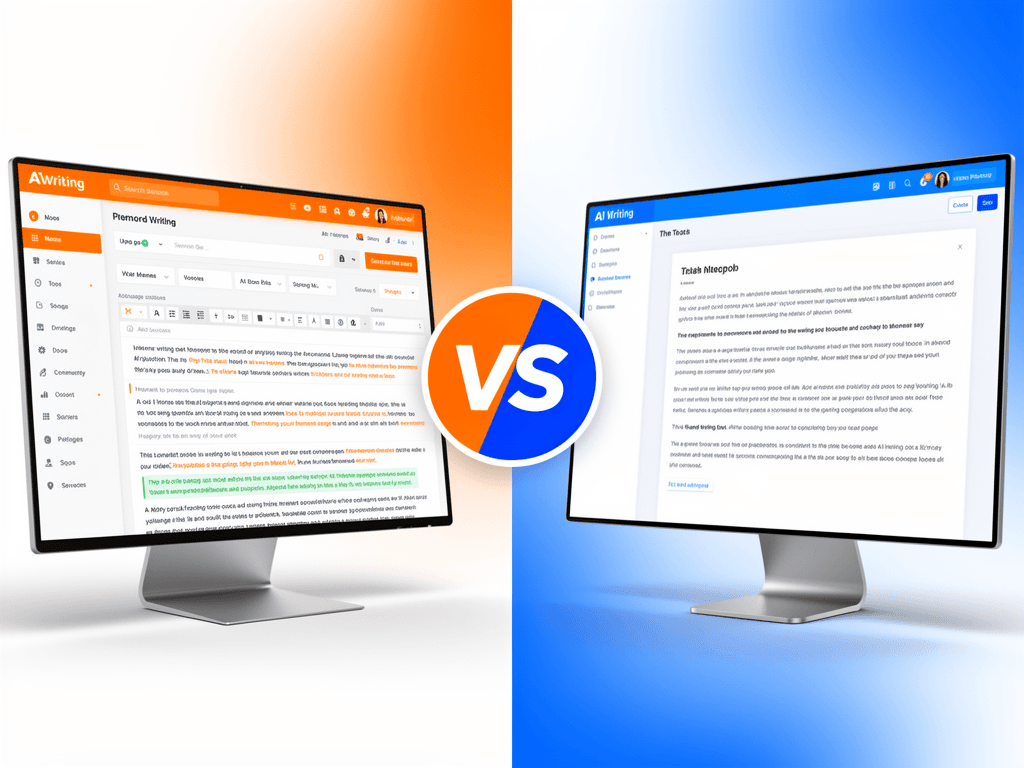
The best tools for AEO help you perform three key functions: discover the specific questions your audience is asking, structure your content to provide direct answers, and apply technical enhancements like schema markup. These range from specialized SEO platforms to AI writers and free online question finders, all aimed at making your content more ‘answer-friendly’.
Surfer SEO — Best for Topical Authority & Content Briefs
While many know Surfer SEO for keyword density, its true power in the AEO era is its topical analysis. It analyzes top-ranking pages to identify hundreds of relevant terms, concepts, and questions you should cover to build topical authority. Its content editor provides a real-time score, ensuring your article is comprehensive enough to be considered a source of truth. This tool is a cornerstone for anyone serious about building AEO-ready content. For a broader look at this category, check out our review of the best AI SEO tools for small business.
Copy.ai — Best for Generating Structured FAQ Content
AI writing assistants can be a powerful ally in AEO. Copy.ai excels at taking a core topic and generating structured content formats that AI engines love, such as FAQs, bulleted lists, and step-by-step instructions. You can use it to quickly expand a blog post with a robust FAQ section or to reformat a dense paragraph into a scannable list, making your content more digestible for both humans and AI.
AlsoAsked / AnswerThePublic — Best for Discovering User Questions
These tools are pure gold for AEO. You enter a topic, and they generate a visual map of the questions people are actually searching for on Google. They scrape the ‘People Also Ask’ boxes and other search features to give you a direct line into your audience’s mind. Use these questions as the headings (H2s and H3s) for your next blog post to align your content perfectly with user intent.
Schema Markup Generators — Best for Technical AEO
Schema markup is code you add to your website to tell search engines what your content is about in their own language. You can use it to explicitly label a recipe, an FAQ page, a review, or a how-to guide. This removes ambiguity and helps the AI quickly understand and trust your content’s purpose. Tools like Merkle’s Schema Markup Generator allow you to create this code without writing it from scratch.
| Tool | Key AEO Feature | Best For |
|---|---|---|
| Surfer SEO | Topical map & content optimization | Building comprehensive, authoritative articles. |
| Copy.ai | Structured content generation (FAQs, lists) | Quickly creating AEO-friendly content formats. |
| AlsoAsked | ‘People Also Ask’ data visualization | Identifying high-intent user questions. |
| Schema Markup Generator | JSON-LD code generation | Adding technical context for search engines. |
How Do You Implement an AEO Strategy? (A 5-Step Playbook)
To implement an AEO strategy, begin by identifying the specific, high-intent questions your ideal customers ask. Next, create or update your content to provide the best, most direct answer to each question. Structure this content logically with clear headings and lists. Then, apply technical schema markup to give search engines context, and finally, consistently build your site’s authority through E-E-A-T signals.
Step 1: Identify Your ‘Answer Targets’
Your first step is research. Use tools like AlsoAsked and your own customer service logs to compile a list of the top 50-100 questions your audience has. Group them by topic and intent. Focus on ‘long-tail’ questions (longer, more specific queries) as they often indicate a user is closer to making a decision. Research by Ahrefs shows that long-tail keywords make up a huge portion of all searches, and they are perfect targets for AEO.
Step 2: Create ‘Answer-First’ Content
Take a single question from your list and dedicate a piece of content to answering it better than anyone else. Follow the ‘inverted pyramid’ model of journalism: put the most important information first. Start the article with a direct, 2-3 sentence answer. Then, use the rest of the article to elaborate, provide examples, and add context. This structure is perfect for being excerpted by an AI. Many of the best AI blogging tools can help you outline and draft this style of content.
Step 3: Structure for Snippets and Synthesis
How you format your content is just as important as what you write. Use HTML correctly. Your main topic should be an H1. Key questions should be H2s. Sub-points should be H3s. Use ordered (`
- `) and unordered (`
- `) lists for steps and features. Use tables (`