What Is AI for E-commerce Customer Service?
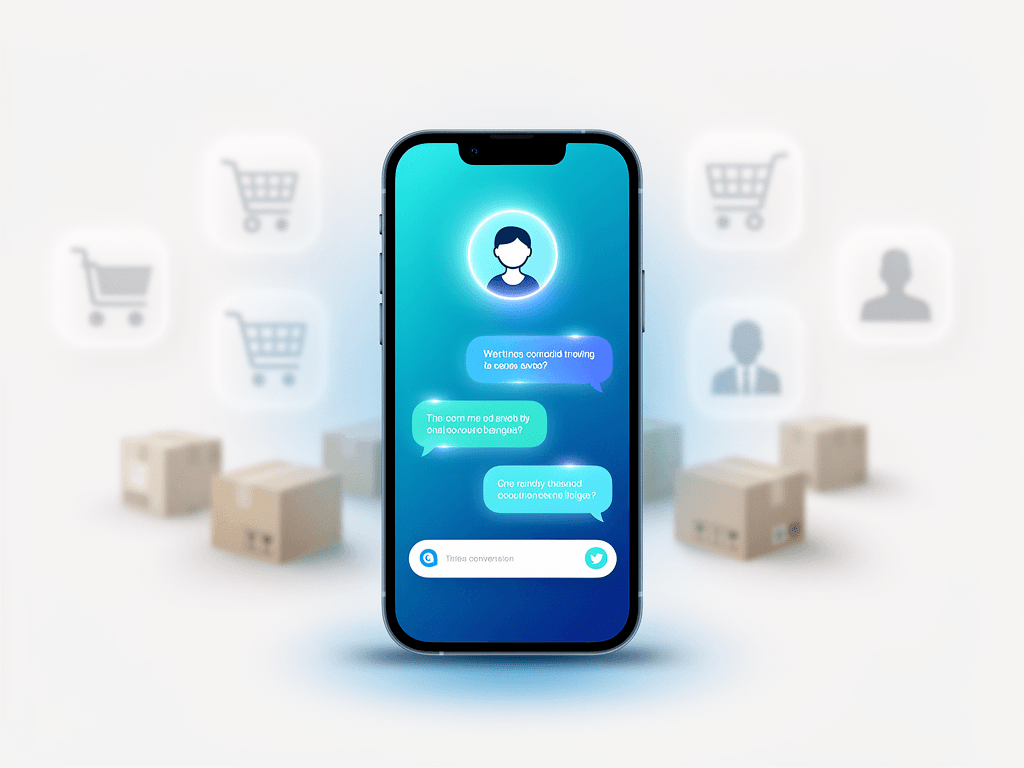
AI for e-commerce customer service uses artificial intelligence to manage and automate customer interactions. It goes beyond simple chatbots to handle complex queries like order tracking, returns processing, and policy questions 24/7. These systems integrate with your store data to provide instant, personalized, and accurate support, freeing up human agents for more complex issues.
You’ve seen the emails pile up. A customer from Boise wants to know where their package is. Another from Miami received a damaged item. For a small e-commerce business owner, customer service can feel like a game of whack-a-mole that never, ever ends. But what if you could resolve 80% of these queries before you even see them?
This isn’t a far-off dream; it’s the reality of AI-powered customer service. Modern AI tools are sophisticated, integrate deeply with platforms like Shopify and Magento, and can handle a staggering amount of your support load with precision and a touch of personality. They are the key to scaling your business without scaling your headcount. For a broader look at the landscape, see our guide to the top AI customer service tools for small businesses.
Why Should Your Small E-commerce Business Automate Support?
Automating e-commerce support is crucial for small businesses to compete effectively. It drastically cuts operational costs, provides the 24/7 instant responses modern consumers expect, and eliminates human error in policy-related answers. This allows your small team to focus on high-value activities like marketing and product development, ultimately boosting customer satisfaction and driving growth.
The question is no longer if you should automate, but how quickly you can start. While you’re manually answering another ‘Where is my order?’ ticket, your competitor is using that time to launch a new product line.
Slash Support Costs & Improve ROI
Human-led support is expensive. According to Gartner, a single live agent interaction costs between $6 and $25, while a fully automated AI interaction can cost as little as 25 cents. By automating high-volume, low-complexity questions, you can dramatically reduce your cost-to-serve and reinvest those savings.
Provide True 24/7/365 Support
Your online store never closes, so why should your customer service? Today’s consumers have high expectations; a recent Zendesk report found that 71% of consumers expect conversational, 24/7 support. An AI system works around the clock, on holidays, and on weekends.
Reduce Human Error & Ensure Policy Compliance
Even the best human agent can have an off day or misremember a specific return policy detail. An AI, trained on your official documents, cannot. It provides the same, perfectly accurate answer every single time. This consistency is vital for building trust, and you can learn more about this in our guide on whether you can trust AI for your business.
Free Up Your Team for High-Value Tasks
What could your team accomplish if they weren’t bogged down by repetitive support tickets? They could be developing new marketing campaigns, improving product descriptions, or engaging with top customers to build loyalty. AI handles the grunt work, turning your support team into a proactive growth engine. This is a core tenet of our favorite AI tools that actually save small business owners time.
Boost Customer Satisfaction and Loyalty
Speed and accuracy are the cornerstones of great service. HubSpot data shows that 90% of customers rate an ‘immediate’ response as important or very important. By providing instant resolutions, you create positive experiences that turn one-time buyers into loyal advocates. And considering a 5% increase in customer retention can boost profits by over 25%.
What Are the Key Areas AI Can Transform in E-commerce Support?
AI transforms e-commerce support by automating the most frequent and time-consuming tasks. This includes instantly resolving ‘Where Is My Order?’ (WISMO) queries, triaging returns and exchanges intelligently, providing accurate answers to product questions based on your data, and even proactively notifying customers about shipping delays before they ask.
Think of the top five questions you answer every day. Let’s explore the highest-impact areas where these tools can make an immediate difference.
The ‘Where Is My Order?’ (WISMO) Problem Solved
This is the big one. For many stores, WISMO queries account for up to 50% of all support tickets. An AI chatbot integrated with your e-commerce platform (like Shopify) and shipping carrier can instantly pull up an order’s status using the customer’s name, email, or order number and provide a real-time update, complete with a tracking link.
Intelligent Returns & Exchanges Triage
Returns are a massive operational headache, costing retailers an estimated $761 billion in a single year. An AI system can guide a customer through the return process, check if the item is eligible based on your policy, generate a shipping label, and even offer an exchange or store credit as an alternative, all without human intervention.
Policy-Accurate Product & Shipping Questions
Is this shirt 100% cotton? Do you ship to Canada? What’s the warranty on this gadget? AI can be trained on your entire product catalog, FAQ pages, and policy documents. It acts as a super-powered search engine, delivering precise answers instantly and reducing pre-purchase friction that might otherwise lead to an abandoned cart.
Proactive Customer Outreach & Status Updates
The best customer service is proactive. Instead of waiting for a customer to ask about a shipping delay, an AI system can identify the delayed order and automatically send a personalized email or SMS update. This manages expectations, builds trust, and turns a potential negative experience into a positive one. This ties directly into using AI for your email marketing to create a seamless customer journey.
Personalized Product Recommendations
While a customer is interacting with the AI for a support query, the system can also analyze their purchase history and browsing data. Based on this, it can make intelligent product recommendations. For example: ‘I see your order for the hiking boots has shipped! Customers who bought those often love our all-weather socks. Would you like to take a look?’ This turns a support interaction into a sales opportunity, and as McKinsey notes, personalization can lift revenues by 5 to 15%.
Which AI Tools Are Best for E-commerce Customer Service?
The best AI tools for e-commerce support are platforms like Gorgias, Intercom, and Tidio, which offer deep integrations with Shopify, Magento, and BigCommerce. These tools combine chatbots, ticketing systems, and automation to manage customer queries across multiple channels. The right choice depends on your store’s size, platform, and specific automation goals.
Choosing a tool can feel daunting, but it boils down to your specific needs. Are you a one-person Shopify store, or a growing team with a multi-channel presence? Here’s a breakdown of the top contenders.
Gorgias — Best for Deep Shopify/Magento Integration
Gorgias is built from the ground up for e-commerce. Its superpower is its incredibly tight integration with platforms like Shopify, Magento, and BigCommerce. It pulls all customer data—past orders, shipping address, etc.—directly into the support view, allowing its AI to perform actions like editing orders or issuing refunds directly within the chat.
Intercom — Best for Proactive Engagement & Full Funnel Support
Intercom is a comprehensive customer communications platform. While not exclusively for e-commerce, its ‘Fin’ AI chatbot is powerful and its proactive messaging tools (like pop-ups that trigger based on user behavior) are excellent for engaging customers before they even have a question. It’s a great choice if you want a single tool for support, sales, and marketing engagement.
Tidio — Best for Startups and Very Small Businesses
Tidio offers a fantastic entry point into AI-powered support. It has a generous free plan, is incredibly easy to set up, and combines live chat, chatbots, and email marketing in one simple interface. Its ‘Lyro’ AI can learn from your FAQ documents in minutes and start answering customer questions almost immediately. It’s the perfect ‘first step’ tool.
Zendesk — Best for Scaling Omnichannel Support
Zendesk is a giant in the customer service space for a reason. It’s a robust, enterprise-grade solution that can handle massive ticket volumes across any channel you can imagine (email, chat, social, phone). Its AI tools are powerful and highly customizable, making it ideal for larger businesses that need a central hub for all customer interactions.
Ada — Best for Enterprise-Grade, No-Code Automation
Ada is a dedicated AI automation platform that focuses on building powerful, no-code chatbots. It’s designed for businesses that want to automate the highest possible percentage of their customer interactions. It’s a more specialized (and often more expensive) tool, but for high-volume stores, the ROI can be immense.
Using AI Writers for Your Chatbot Scripts
The intelligence of your chatbot is only as good as the scripts and knowledge you give it. This is where AI writing assistants become invaluable. You can use them to craft responses that are not only accurate but also perfectly match your brand’s voice. They help you brainstorm variations, ensure clarity, and inject personality.
Jasper — Best for Crafting Brand-Voice Aligned Responses
Jasper is excellent at capturing and replicating a specific brand voice. You can feed it examples of your existing customer communication, and it will generate chatbot scripts, FAQ answers, and email templates that sound genuinely like you. This ensures a consistent customer experience, whether they’re talking to a bot or a human. It’s a powerful tool in the content creation arsenal, as we’ve discussed in our comparison of AI writers.
Copy.ai — Best for Generating Multiple Script Variations Quickly
If you need to generate a wide array of potential responses for different scenarios, Copy.ai is a fantastic choice. Its strength lies in producing a high volume of creative options quickly. This is perfect for A/B testing different chatbot greetings or finding the most effective way to phrase a response to a common objection.
How Do You Compare the Top AI E-commerce Support Tools?
To compare AI support tools, evaluate them on three key criteria: e-commerce platform integration, AI capabilities, and pricing model. Deep integration with Shopify or your chosen platform is non-negotiable for accessing order data. Assess the AI’s ability to handle complex flows versus just FAQs. Finally, match the pricing (per-seat vs. per-resolution) to your business model.
Here’s a high-level comparison to help you distinguish between the leading options:
| Tool | Key Feature | AI Capabilities | Best For |
|---|---|---|---|
| Gorgias | Deep Shopify/BigCommerce integration; can edit orders in-chat. | Automates up to 80% of common e-commerce tickets (WISMO, returns). | Shopify/Magento stores wanting maximum automation with minimal setup. |
| Intercom | Proactive messaging and full-funnel engagement tools. | Powerful ‘Fin’ AI chatbot, excels at both support and sales conversations. | Businesses wanting a single platform for support, marketing, and sales engagement. |
| Tidio | Generous free plan and extremely easy setup. | ‘Lyro’ AI learns from your website/FAQs in minutes to answer questions. | Startups and small businesses looking for an affordable, all-in-one entry point. |
| Zendesk | Robust, omnichannel ticketing system for scaling. | Advanced AI and answer bots that can be highly customized for complex workflows. | Larger, growing businesses needing a centralized, powerful support hub. |
How Do You Implement an AI Customer Service Workflow? (Step-by-Step)
Implementing an AI service workflow involves an eight-step process. Start by auditing your current support tickets to identify common issues. Then, define clear automation goals, select an AI tool that integrates with your e-commerce platform, and train it on your company policies. Finally, build, test, and continuously monitor your automation playbooks for performance.
This might sound complex, but it’s a methodical process. Follow these steps to ensure a smooth and successful launch. For a deeper dive, check out our complete guide to AI workflow automation.
Step 1: Audit Your Current Support Tickets
Before you automate, you need to understand what to automate. Spend a week categorizing every single support ticket you receive. Group them into buckets like ‘Order Status’, ‘Return Request’, ‘Product Question’, ‘Shipping Query’, etc. This data is gold.
Step 2: Define Your Automation Goals
Look at your audit. If 50% of your tickets are WISMO, your first goal is clear: ‘Automate 100% of order status questions.’ Be specific. A good goal is ‘Reduce response time for product questions to under 1 minute, 24/7.’
Step 3: Choose Your Core AI Platform
Based on your goals, e-commerce platform, and budget, select a tool. If you’re on Shopify and your main goal is WISMO/returns, Gorgias is a strong contender. If you’re a startup needing something fast and free to start, Tidio is your answer.
Step 4: Integrate with Your E-commerce Stack
This is a critical step. Connect your chosen AI tool to your e-commerce platform (e.g., Shopify) and any shipping software you use. This is what allows the AI to access real-time order and customer data to provide accurate answers.
Step 5: Train the AI on Your Policies and Product Data
Upload your FAQ page, return policy, shipping policy, and any other knowledge base documents you have. Modern tools can ‘read’ these documents and use them to answer questions. The more information you provide, the smarter your bot will be.
Step 6: Build Your First Automation Playbooks
Start with the biggest bucket from your audit. Build the ‘WISMO bot’. Create a workflow that asks for an order number or email, looks up the order, and provides the tracking status. Then build your ‘Return bot’. Tackle one major workflow at a time.
Step 7: Test Rigorously Before Full Launch
Before you unleash your bot on all site visitors, test it internally. Have your team pretend to be customers and try to break it. Ask it tricky questions. Ensure the escalation path to a human agent is clear and works perfectly.
Step 8: Monitor, Analyze, and Continuously Improve
Your work isn’t done at launch. Use the analytics dashboard in your AI tool. Which questions is the bot failing to answer? Where are customers getting stuck? Use this data to refine your playbooks, add to your knowledge base, and make your AI even more effective over time.
What Are 5 Specific Workflows to Automate Immediately?
For immediate impact, automate these five e-commerce workflows: a 24/7 order status bot to handle WISMO queries, a smart returns initiator that guides users and generates labels, a pre-purchase product expert that answers questions from your catalog, a post-purchase feedback collector, and a proactive shipping delay notifier.
Ready to get started? Here are five high-impact automations you can build this week.
1. The 24/7 Order Status & Tracking Bot
This is your number one priority. It greets a user, asks for their order number or email, and instantly provides the latest tracking information from your shipping carrier, complete with a direct link.
2. The Smart Returns & Exchange Initiator
This flow asks the customer for their order number, displays the items, and asks which they’d like to return. It checks your policy to confirm eligibility, then offers a return label, an exchange for a different size, or store credit.
3. The Pre-Purchase Product Question Responder
This AI is trained on your entire product catalog. A customer can ask, ‘Are your t-shirts pre-shrunk?’ or ‘Is the Large size in the blue jacket in stock?’ and get an instant, accurate answer, helping to close the sale.
4. The Post-Purchase Feedback & Review Collector
Set a trigger to automatically email or message a customer 14 days after their order is delivered. The AI can ask about their experience and request a product review, directing them to the appropriate page on your site.
5. The Proactive ‘Shipping Delay’ Notifier
This is an advanced but powerful workflow. The system monitors for carrier tracking statuses that indicate a delay. When one is found, it automatically sends a personalized message to the customer: ‘Hi [Name], we noticed a small delay…’ This builds immense trust.
How Can You Ensure Your AI Support Feels Human and On-Brand?
To make AI support feel human, develop a clear bot persona that reflects your brand’s voice. Use natural, conversational language and avoid corporate jargon. Crucially, always provide a seamless and clearly marked escalation path for customers to reach a human agent if the AI cannot solve their problem.
The fear of ‘robotic’ customer service is valid, but avoidable. With nearly 83% of companies making AI a top priority, getting the tone right is a key differentiator.
Develop a Clear Bot Persona
Is your brand fun and witty, or professional and reassuring? Give your bot a name and a personality that aligns with your brand. This small step makes the interaction feel less like talking to a machine and more like a guided experience.
Use Natural Language and Avoid Jargon
Write your bot’s scripts the way you would talk to a customer. Use contractions. Ask questions. Use tools like Jasper to refine the language to be warm and approachable. Avoid sterile phrases like ‘Awaiting user input’.
Always Provide a Clear Escalation Path to a Human
This is the most important rule. Nothing is more frustrating than being trapped in a loop with a bot that doesn’t understand. Make the ‘Talk to a person’ button visible and easy to access at any point in the conversation. The AI’s job is to handle the easy stuff, not to be a wall.
Inject Personality with Emojis and Casual Tone (If On-Brand)
If it fits your brand, a well-placed emoji or a bit of humor can go a long way. A smiling emoji 😊 when an order is found or a thumbs-up 👍 when a return is processed can make the interaction feel friendlier and more positive.
Frequently Asked Questions about AI for E-commerce Support
Will AI replace my human customer service agents?
No, AI is designed to augment your human agents, not replace them. It handles the repetitive, high-volume queries, which frees up your team to focus on complex, high-empathy situations where a human touch is essential. It makes your existing team more efficient and effective.
Is AI customer service expensive for a small business?
It doesn’t have to be. While enterprise solutions can be costly, tools like Tidio offer powerful AI features on free or very affordable plans (starting around $30-$50/month). The cost savings from reduced support time often provide a very quick return on investment.
How long does it take to set up an AI chatbot?
The basics can be set up in under an hour. Modern tools like Tidio’s Lyro can learn your website content and start answering questions in minutes. Building out more complex, integrated workflows (like returns automation) might take a few days of focused effort, but the initial setup is surprisingly fast.
Can AI handle complex or angry customer queries?
AI is best at handling informational and transactional queries. For emotionally charged or highly complex issues, the best practice is for the AI to recognize the sentiment or complexity and immediately escalate the conversation to a human agent. Its job is to triage, not to solve every problem.
Your Next Step: From Overwhelmed to Automated
You started your e-commerce business to sell products you’re passionate about, not to answer the same questions a hundred times a day. The constant stream of support tickets is a sign of success, but it’s also a bottleneck that prevents you from focusing on growth. Implementing AI for customer service is the single most effective step you can take to break through that barrier.
The technology is here, it’s affordable, and it’s easier to implement than you think. By automating just the top 2-3 most common questions, you can reclaim hours every week, delight your customers with instant answers, and build a more resilient, scalable business. Start today by auditing your support tickets. Identify your ‘WISMO’ problem, and take the first step toward solving it for good.
Disclosure: Sam Shustle Barn is an independent publication. We may mention software for which we have an affiliate relationship, but our recommendations are based on our own research and experience. This post does not contain any active affiliate links.
Free Download
Get the 25 AI Tools Guide — Free
Save 10–40 hours a month. Real pricing, honest verdicts, zero hype. Small business owners only.
No spam. Unsubscribe anytime.
Get AI Tips That Actually Work
Join small business owners getting weekly AI tool reviews, automation tips, and productivity hacks.
Subscribe Free →Enjoyed this article? Check out our other guides on samshustlebarn.com