
The average time to fill a position in the U.S. now hovers around 44 days. For a small business owner, that’s nearly a month and a half of lost productivity, mounting workloads for your existing team, and the nagging stress of an empty seat. You’re not just looking for a new hire; you’re trying to find the right person while juggling every other aspect of your business.
What if you could reclaim a significant portion of that time? What if you could screen hundreds of resumes in minutes, not days, and automatically identify the top 10% of candidates who are actually qualified? This isn’t a future fantasy; it’s what AI-powered hiring tools are doing for small businesses right now.
What is AI in Hiring and Why Should Small Businesses Care?
AI in hiring uses artificial intelligence, particularly machine learning and natural language processing, to automate and enhance parts of the recruitment process. For small businesses, this technology is a game-changer, allowing you to save immense amounts of time, reduce unconscious bias, and make more data-driven decisions to find better candidates, faster.
Traditional hiring is a notorious time sink. You post a job and are immediately flooded with applications. You then face the daunting task of manually sifting through each resume, a process where fatigue and unconscious bias can easily creep in. The cost of getting it wrong is steep; the U.S. Department of Labor estimates a bad hire can cost a business at least 30% of the employee’s first-year earnings.
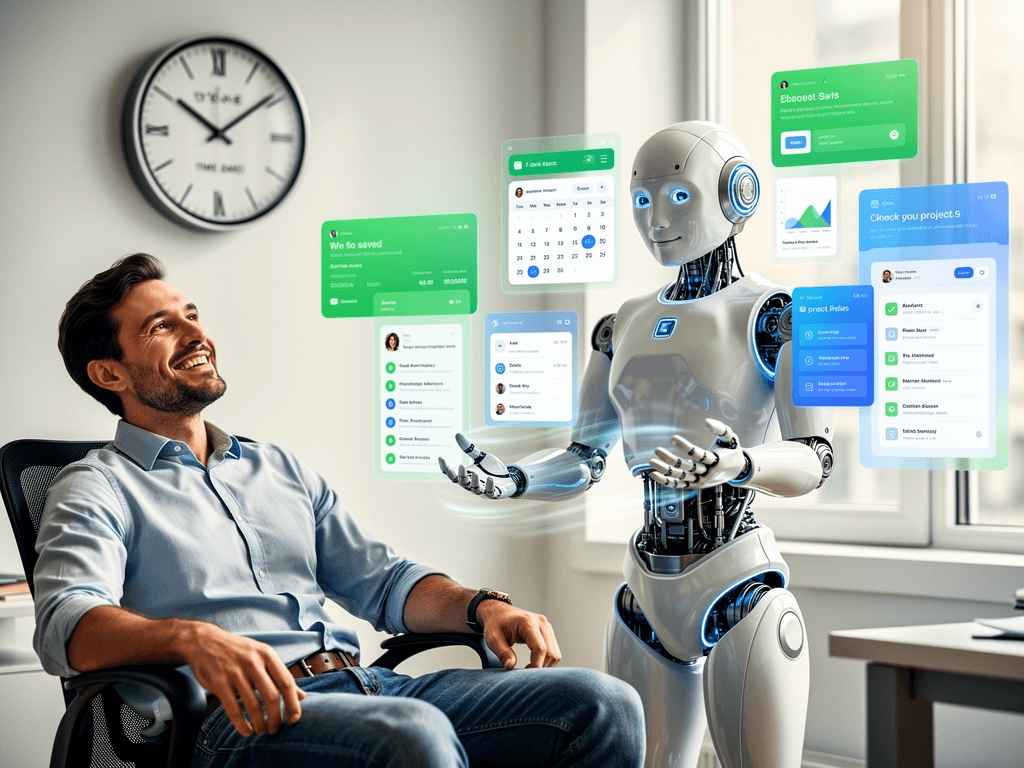
This is where AI steps in. It’s not about replacing the human element of hiring—your intuition and ability to gauge cultural fit are irreplaceable. It’s about augmenting your capabilities. As a small business owner, you’re competing with larger companies for talent. AI levels the playing field, giving you access to the same sophisticated tools they use to streamline their process. A Deloitte survey revealed that 92% of AI adopters believe it will be crucial for their competitiveness. Can you afford to be left behind?
How Can AI Automate Resume Screening?
AI automates resume screening by using natural language processing (NLP) to read and understand the contents of a resume, just like a human would, but at a massive scale. It extracts key information, matches it against your job description’s requirements, and scores or ranks candidates, allowing you to focus only on the most qualified applicants.
Imagine you receive 200 applications for a marketing manager role. Manually reviewing them could take days. In fact, one study found that recruiters spend about 23 hours screening resumes for a single hire. An AI-powered Applicant Tracking System (ATS) can do the initial pass in minutes. Here’s how it works:
- Parsing: The AI first parses resumes in various formats (PDF, DOCX) and structures the data, identifying sections like ‘Work Experience,’ ‘Education,’ and ‘Skills.’
- Keyword and Skill Matching: It then scans for specific keywords and skills you’ve defined as critical for the role (e.g., ‘Google Analytics,’ ‘SEO,’ ‘project management,’ ‘Python’).
- Contextual Understanding: Modern AI goes beyond simple keyword matching. It understands context. It knows that ‘managed a team of 5’ is more significant than just listing ‘management’ as a skill.
- Scoring and Ranking: Based on this analysis, the system scores each candidate and presents you with a ranked list. You can immediately see who your top 10 or 20 candidates are, allowing you to skip the 180 who were clearly unqualified.
This process not only saves hundreds of hours but also introduces a level of consistency and objectivity that is difficult for humans to maintain. It’s a foundational piece of AI workflow automation that directly impacts your bottom line.
What are the Best AI Hiring Tools for Small Businesses?
The best AI hiring tools for small businesses are typically cloud-based Applicant Tracking Systems (ATS) that have integrated AI features. These platforms offer affordable, scalable solutions for resume screening, candidate communication, and interview scheduling without the enterprise-level price tag. They help you organize and streamline your entire hiring pipeline.
With 75% of recruiters already using some form of ATS, choosing the right one is critical. Look for a tool that is intuitive, fits your budget, and focuses on the features you need most. Here are some of the top contenders for small businesses, known for their powerful AI capabilities and user-friendly design.
| Tool | Key AI Feature | Pricing Model | Best For |
|---|---|---|---|
| Manatal | AI-powered candidate sourcing & scoring | Per user/month | All-in-one recruitment |
| Breezy HR | Automated screening questionnaires | Per month (unlimited users) | Simplicity and visual pipelines |
| Recruitee | Automated actions & talent pools | Based on active jobs | Collaborative team hiring |
| Freshteam | Integrated HR suite with ATS | Freemium & per employee/month | Businesses needing a full HRIS |
Manatal — Best for All-in-One AI Recruitment
Manatal is a powerful, modern ATS that places AI at its core. Its standout feature is the AI-driven recommendation engine. After you post a job, it not only screens incoming applicants but also scours your existing candidate database to surface past applicants who are a good fit. It simplifies sourcing and ensures no good candidate is forgotten.
Breezy HR — Best for User-Friendly Interface
Breezy is consistently praised for its clean, drag-and-drop Kanban-style pipeline. While its AI is less about black-box scoring, it excels at automation. You can set up ‘Stage Actions’ to automatically send emails, questionnaires, or scheduling links when you move a candidate to a new stage. This is a simple but incredibly effective way to automate communication and keep candidates engaged.
Recruitee — Best for Collaborative Hiring
Recruitee is designed for teams. It makes it easy to involve multiple stakeholders in the hiring process with shared notes, evaluations, and mentions. Its automation features allow you to set up rules to disqualify candidates who don’t meet certain criteria or to send skills tests automatically, helping to streamline the collaborative decision-making process.
Freshteam by Freshworks — Best for Integrating with an HR Suite
If you’re looking for more than just a hiring tool, Freshteam is part of the Freshworks ecosystem. It offers a robust free plan for small businesses and its ATS is just the beginning. It integrates seamlessly with employee onboarding, time-off management, and other HR functions, providing a single source of truth from candidate to employee.
Can AI Help with More Than Just Resumes?
Absolutely. While resume screening is a major time-saver, modern AI hiring platforms extend their capabilities across the entire recruitment lifecycle. They automate administrative tasks and provide data-driven insights at multiple stages, from initial contact to scheduling interviews and even analyzing candidate sentiment, creating a more efficient process overall.
Think of AI as your silent HR assistant, working in the background to handle the repetitive tasks that bog you down. This frees you up to focus on the high-value, human-centric parts of hiring: building relationships with top candidates, conducting meaningful interviews, and selling them on your company’s vision. Here are some of the most impactful applications beyond the resume pile.
Automated Interview Scheduling
The back-and-forth of scheduling interviews is a universal headache. AI tools integrate with your calendar (and your team’s), find mutually available times, and send automated invites to candidates. The candidate simply clicks a link, picks a slot, and the event is created for everyone. This alone can save hours per hire.
AI-Powered Chatbots for Initial Screening
You can embed an AI chatbot on your careers page. It can engage potential applicants 24/7, answer their basic questions about the role and company, and even run them through a set of pre-screening questions (e.g., ‘Do you have 3+ years of experience with X?’, ‘Are you authorized to work in the US?’). This qualifies leads before they even apply.
Video Interview Analysis
Some advanced platforms offer AI analysis of one-way video interviews. Candidates record answers to a set of questions on their own time. The AI can then transcribe the answers and analyze speech patterns, word choice, and other indicators to provide insights into a candidate’s communication skills and enthusiasm. This should be used as a supplementary data point, not a decision-maker, as covered in our guide on whether you can trust AI for business.
Personalized Candidate Communication
Instead of generic ‘Thank you for your application’ emails, AI can help personalize communication at scale. Using templates and candidate data, it can send more relevant updates, keeping your talent pool warm and engaged. A positive candidate experience is crucial, as 78% of candidates say it reflects how a company values its people.
How Do You Implement an AI Hiring System Step-by-Step?
Implementing an AI hiring system involves auditing your current process, defining your key needs, selecting the right tool, and then carefully configuring it to match your jobs. The key is to start with a clear goal, like reducing time spent on screening, and to roll out the system thoughtfully rather than flipping a switch overnight.
Adopting new technology can feel intimidating, but a structured approach makes it manageable. Follow these steps to ensure a smooth and successful integration of AI into your hiring workflow.
Step 1: Audit Your Current Hiring Process
Before you look at any software, map out your existing process. Where are the bottlenecks? How much time are you spending on each stage (screening, scheduling, interviewing)? Identify the one or two biggest pain points you want to solve. Is it the sheer volume of unqualified applicants? Or the time spent coordinating interviews?
Step 2: Define Your Key Requirements and Budget
Based on your audit, create a checklist of ‘must-have’ features. This might include AI resume screening, automated scheduling, or a branded careers page. Also, set a realistic monthly or annual budget. Many of these tools are surprisingly affordable, with plans often starting under $100/month. This is a small investment compared to the cost of your time. If budget is a concern, check out our guide on AI tools for small business finance.
Step 3: Research and Select the Right AI Tool
Using your requirements list, research the tools mentioned above and others. Read reviews on sites like G2 and Capterra. Most importantly, sign up for free trials or demos for your top 2-3 choices. Get a feel for the user interface. Is it intuitive? Does it feel like one of the top AI productivity tools that actually save time, or is it overly complex?
Step 4: Configure and Customize the Software
Once you’ve chosen a tool, it’s time for setup. This is the most critical step. You’ll need to create your job templates and define the keywords, skills, and qualifications the AI should look for. Be specific. For a sales role, instead of ‘sales,’ use terms like ‘SaaS sales,’ ‘quota attainment,’ and ‘Salesforce CRM.’ The better your input, the better the AI’s output.
Step 5: Train Your Team and Go Live
If you have anyone else involved in hiring, walk them through how to use the new system. Show them how to review ranked candidates, leave feedback, and move people through the pipeline. Start by using the tool for one new job opening to work out any kinks.
Step 6: Monitor, Analyze, and Refine
Your AI tool will provide valuable data. Are you hiring faster? Is the quality of candidates making it to the interview stage better? Use these analytics to refine your screening criteria. AI hiring isn’t a ‘set it and forget it’ solution; it’s a system you continually improve.
What are Some Specific Hiring Workflows to Automate?
Small businesses should automate high-volume, low-judgment tasks first. This includes auto-screening applications for roles with many applicants (like customer service), automatically scheduling first-round phone screens, sending polite rejection emails to unqualified candidates, and using chatbots to answer common applicant questions on your website.
Here are five concrete examples of workflows you can set up today:
Workflow 1: Auto-Screening for a Customer Service Rep
When hiring for a role like a customer service rep, you might get hundreds of applicants. Set up your AI to automatically screen for ‘must-have’ criteria like ‘1+ year of customer support experience’ and ‘experience with Zendesk/Help Scout.’ The system can auto-reject anyone who doesn’t meet these minimums and rank the rest, presenting you with a manageable shortlist. This is a perfect use case explored in our guide to AI for customer service.
Workflow 2: Automated Scheduling for Sales Development Reps
For a sales role, speed is key. When a promising candidate applies, you can trigger an automated workflow that immediately sends them an email with a link to your calendar to book a 15-minute introductory call. This impresses the candidate and gets them in your pipeline before a competitor does. This mirrors the speed needed in AI for sales outreach.
Workflow 3: Pre-screening Technical Roles with Chatbots
Hiring a developer? Embed a chatbot on the job posting page. Configure it to ask a few simple technical questions, like ‘Which of these frameworks are you most proficient in: React, Vue, or Angular?’ or ‘Can you share a link to your GitHub profile?’. This gathers key information upfront.
Workflow 4: Bulk Rejection and Nurturing for Non-Fits
Never ghost a candidate. It’s bad for your brand. Use your ATS to send a polite, personalized rejection email to candidates who aren’t a fit. You can also create a ‘Talent Pool’ tag for promising candidates who weren’t right for *this* role but might be great for a future one, and send them quarterly updates.
Workflow 5: Onboarding Paperwork Automation
Once you’ve made a hire, the automation doesn’t have to stop. Many HR-focused systems like Freshteam can automatically send the offer letter for e-signature, along with new-hire paperwork like W-4s and I-9s, ensuring a smooth transition from candidate to employee.
What Are the Risks and Ethical Considerations of AI in Hiring?
The primary risks of AI in hiring are algorithmic bias, a lack of transparency, and a poor candidate experience. If an AI is trained on biased historical data, it can perpetuate and even amplify those biases. It’s crucial for businesses to audit their tools, ensure human oversight, and maintain a personal touch throughout the process.
While AI offers incredible efficiency, it’s not a silver bullet. You must be aware of the potential pitfalls to use it responsibly.
Algorithmic Bias
This is the biggest concern. If your company has historically hired from only one demographic, an AI trained on your past ‘successful’ hires might learn to favor that same demographic, unfairly filtering out qualified, diverse candidates. Research from Harvard Business Review shows how persistent bias can be. To mitigate this, use reputable vendors who actively work to de-bias their algorithms and regularly audit your results.
Transparency and ‘Explainability’
If an AI rejects a candidate, can you explain why? Many AI models are ‘black boxes,’ making it difficult to understand their reasoning. This is a problem both ethically and legally. Push for tools that offer some level of explainability, showing you *which* criteria a candidate did or did not meet.
Candidate Experience
Over-automating can feel cold and impersonal. No one wants to be rejected by a robot. Ensure your automated communications are warm and respectful. Always provide a way for candidates to reach a real human if they have questions. The goal is efficiency, not elimination of the human touch.
Data Privacy and Security
You are collecting a massive amount of personal data. Ensure your chosen platform complies with regulations like GDPR and CCPA. Be transparent with candidates about how their data is being used and stored. Building trust starts with respecting privacy, a topic we cover in our guide on building trust with AI.
Recommended Reading for Hiring Managers
To supplement your new AI-powered process, it’s essential to sharpen your fundamental hiring strategy. A tool can find you qualified candidates, but you still need the skills to interview them effectively and make the final choice. We highly recommend the book ‘Who: The A Method for Hiring’ by Geoff Smart and Randy Street. It provides a simple, practical framework for conducting structured interviews and making evidence-based hiring decisions. You can grab a copy on Amazon to pair its timeless human insights with your modern AI tools.
Frequently Asked Questions (FAQ)
Does AI replace human recruiters?
No, AI is a tool to augment, not replace, human recruiters and hiring managers. It handles the repetitive, high-volume tasks like initial resume screening and scheduling, freeing up humans to focus on strategic activities like building candidate relationships, conducting in-depth interviews, and assessing cultural fit.
Is AI hiring expensive for a small business?
It doesn’t have to be. While enterprise systems can be very expensive, the market for small business AI hiring tools is growing. Many powerful platforms offer free plans or affordable monthly subscriptions, often starting under $100. The time saved often provides a rapid return on investment.
How can I ensure my AI hiring tool is not biased?
Choose vendors who are transparent about how they mitigate bias. Regularly audit your hiring outcomes: is the AI helping you build a more diverse pipeline? Override the AI when your judgment differs. Most importantly, use the AI for initial screening, but ensure that final decisions are always made by diverse human teams.
Can AI also help write job descriptions?
Yes, many modern AI writing tools can help you craft more effective and inclusive job descriptions. They can analyze your text for potentially biased language and suggest more neutral alternatives. They can also help you clearly articulate the key responsibilities and qualifications, attracting more suitable candidates from the start.
The Smartest Hire You’ll Make This Year
The reality for small businesses is clear: an 82% of owners find hiring to be a significant challenge. You can’t afford to spend weeks sifting through resumes when you need to be running your company. AI hiring tools are no longer a luxury; they are a competitive necessity.
By automating the top of your hiring funnel, you reclaim your most valuable asset: time. You introduce a level of objectivity that’s hard to achieve manually. And according to McKinsey, you can reduce your time-to-hire by up to 35%.
Ready to get started? Don’t try to boil the ocean. Begin by auditing your current process and identifying your biggest bottleneck. Then, take advantage of the free trials offered by tools like Breezy HR or the generous free plan from Freshteam. Automate just one part of your process and see the difference it makes. Your next great hire is out there; AI can help you find them faster.
Disclosure: This post may contain affiliate links. If you make a purchase through these links, we may earn a commission at no extra cost to you. We only recommend products and services we believe will provide value to our readers.
Get AI Tips That Actually Work
Join small business owners getting weekly AI tool reviews, automation tips, and productivity hacks.
Subscribe Free →Enjoyed this article? Check out our other guides on samshustlebarn.com